Our telecom infrastructure solutions are deployed in environments ranging from climate-controlled data centers to remote desert cell tower sites. Each industry demands different capabilities, and we engineer accordingly.
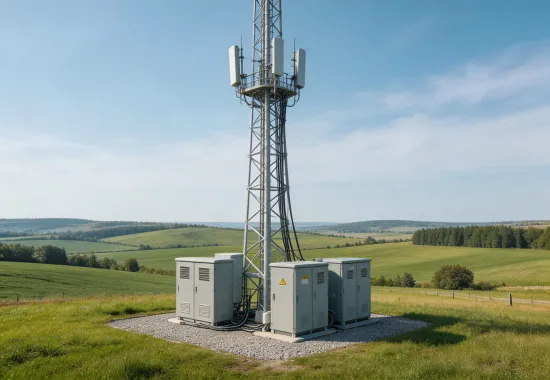
Mobile operators and fixed-line carriers rely on Hoffman outdoor cabinets for base station equipment housing, central office distribution frames, and network aggregation points. Our IP67-rated enclosures withstand temperature extremes from -40 C to +55 C, protecting sensitive electronics in unattended sites year-round.
High-density computing environments demand infrastructure that maximizes floor space efficiency while ensuring optimal airflow and cable management. Hoffman server racks and fiber distribution frames are designed for rapid deployment and easy reconfiguration as data center needs evolve.
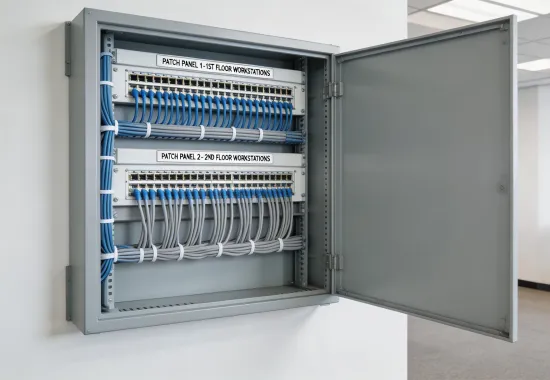
Office buildings, hospitals, and educational campuses require network infrastructure that fits within architectural constraints while supporting growing bandwidth demands. Hoffman wall-mount and compact floor enclosures bring carrier-grade reliability to enterprise environments.
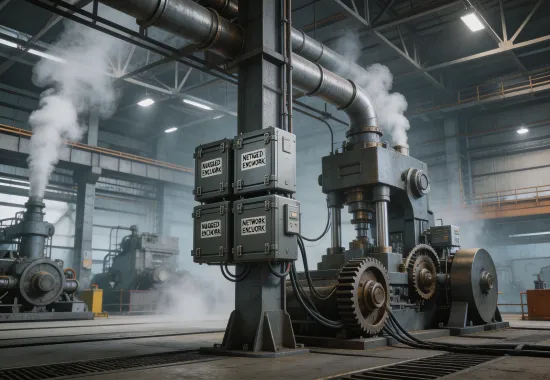
Industrial facilities, power plants, and utility substations expose network equipment to vibration, dust, corrosive chemicals, and extreme temperatures. Hoffman ruggedized enclosures are engineered to maintain seal integrity and structural stability across these demanding conditions.
Choosing the right infrastructure involves weighing competing priorities. Here are two decisions our customers navigate regularly.
This is one of the most consequential architecture decisions for fiber deployments, and the optimal choice depends heavily on your specific deployment context.
AON provides dedicated bandwidth per subscriber, longer reach up to 80 km without signal degradation, and simpler troubleshooting since each user has an independent optical path. For enterprise campus networks or long-haul access, AON often delivers better per-user performance consistency.
PON eliminates powered equipment at split points, reducing operational expenses and outside plant complexity. GPON and XGS-PON systems are more cost-effective for high-density residential deployments where shared bandwidth is acceptable. A single OLT port can serve up to 128 subscribers via passive splitters with no field power required.
Hoffman manufactures enclosures for both architectures. Our ODF frames support AON point-to-point fiber termination, while our distribution boxes accommodate PON splitter modules. The right choice depends on subscriber density, distance, and operational budget.
Network operators increasingly face this choice when building or expanding infrastructure, and it directly affects enclosure and cabling requirements.
A unified vendor stack provides a single management plane, proven interoperability between components, and one support contact for troubleshooting. For carriers with tight deployment timelines, this reduces integration risk and accelerates rollout.
Open networking standards like OpenConfig and SONiC enable best-of-breed component selection and avoid vendor lock-in. White-box switches can reduce hardware costs by 30-60% compared to proprietary platforms, though operational complexity increases.
From an infrastructure perspective, disaggregated networks often require more flexible enclosure configurations since equipment form factors vary across vendors. Hoffman modular rack systems with adjustable rail depths accommodate this variability without requiring new enclosure purchases.
Passive cooling (natural convection) is effective only up to approximately 500W heat dissipation in temperate climates. Above that threshold or in ambient temperatures exceeding 40 C, active cooling (fans, heat exchangers, or air conditioning) is required. Active cooling adds maintenance burden and power consumption that must be factored into total cost of ownership.
Higher IP ratings (IP67) provide superior environmental protection but reduce ease of field access. Every cable entry, ventilation point, and access door requires sealing that adds time to installation and maintenance. For frequently serviced enclosures, IP55 or IP65 may offer a better balance between protection and operational efficiency.
Custom enclosure tooling amortizes effectively above 50-100 units. For smaller quantities, modifying a standard platform is typically 40-60% less expensive than full custom design. We recommend evaluating whether standard products with minor modifications can meet your requirements before committing to a fully custom program.
Every deployment environment is unique. Share your project details and our team will recommend the right infrastructure solution.
Contact Us